Wood Number Match
- 3.8
- Rating
- 50.00K
- Installs
- Free
- Price
 Analysis by App-foxy
I approached Wood Number Match as the kind of small puzzle game you open when you want to focus on one simple task rather than commit to a long gaming session. Its wooden visual theme and number-based play give it a calm, familiar feel, but the real question is whether the matching challenge stays interesting after the first few rounds. In my experience, it works best as a quiet mental break: easy to understand at the start, yet capable of making me pause when the board becomes less obvious.
This is a free trivia game from ToolStudio (Mobile Apps), rated for Everyone. It has reached over 50 thousand installs and holds an average rating of 3.8 from around 56 ratings, so it has attracted a modest but noticeable audience rather than presenting itself as a huge mainstream title. I would describe it as a lightweight choice for people who enjoy number puzzles, visual organization, and short bursts of concentration.
What the first few minutes feel like
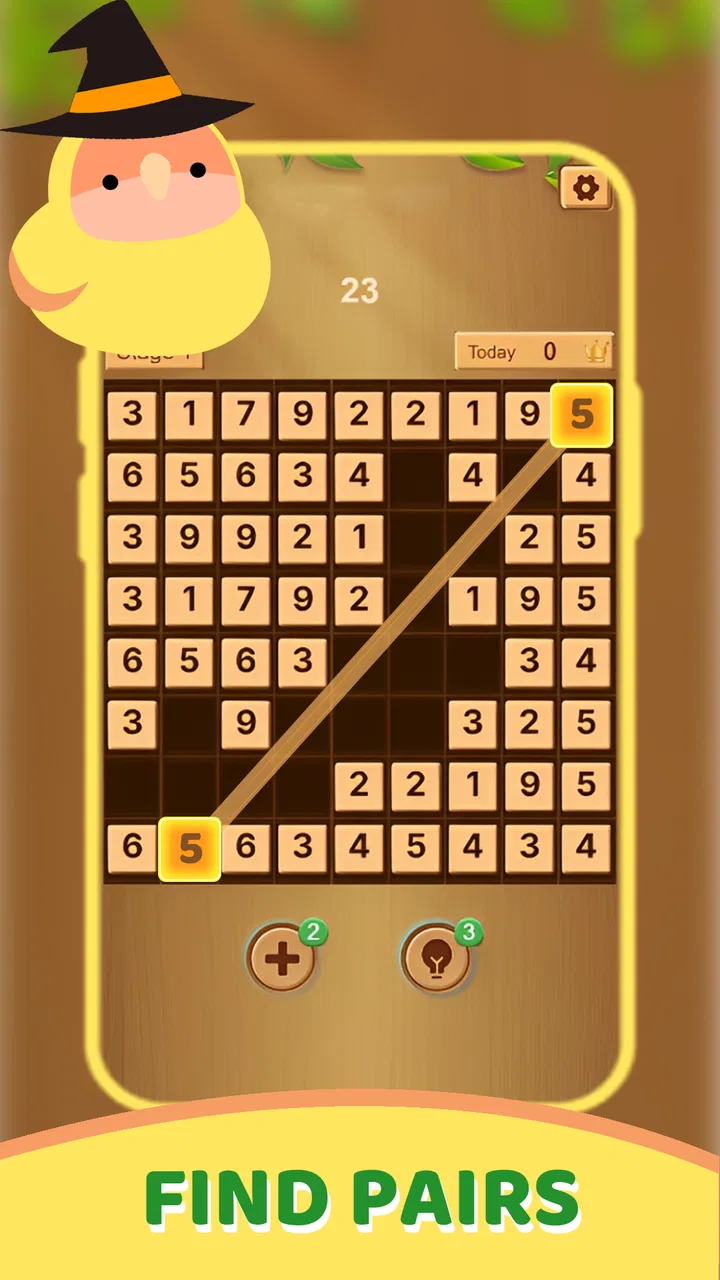
The opening experience is deliberately approachable. You do not need to learn a complicated story, manage a character, or understand a large collection of menus before playing. The central idea is to work with numbers on a wooden-style puzzle board and look for useful matches. That simplicity is a strength for a first-time player because the game gives you a clear reason to interact with it immediately.
You May Also Like

 AccuWeather: Weather Radar
AccuWeather Review: A Quick, Clear Forecast for Everyday Decisions
For everyday plans, the best forecast is the one you can understand quickly. AccuWeather makes rain timing, radar, and local conditions easy to act on, with a few trade-offs.

 Hill Climb Racing
Why Hill Climb Racing Still Turns Crashes Into One More Run
A tiny car, a bumpy hill and one more upgrade: Hill Climb Racing keeps resurfacing because its simple chaos makes every near-miss feel personal.

 AliExpress - Shopping App
AliExpress Makes Global Shopping Feel Personal, but Shoppers Bear the Risk
AliExpress turns a global marketplace into a pocket-sized discovery engine. Its reach is useful, its shopping loop compelling, and its trade-offs easy to miss.

 Lords Mobile: Kingdom Wars
Lords Mobile Is a Kingdom-Building Routine, Not a Quick Match
A case-by-case verdict on the building, battles, device demands, and social commitments that make Lords Mobile rewarding for some players and exhausting for others.

 PDF Scanner app - TapScanner
TapScanner Makes Paperwork Easier to Capture, Check, and Share
TapScanner makes scanning with a phone feel less like a rescue operation and more like a dependable step in getting work done. Its capture tools are useful, though not flawless.

 Block Blast!
 Shows How Much a Puzzle Game Can Leave Out
A quiet grid game shows why puzzle players increasingly value instant clarity, repeatable skill and low-pressure play—and where the genre still needs to catch up.
More From Our News Desk
View All News


At the same time, “simple” does not mean completely automatic. The first successful move comes from noticing relationships between the visible numbers, not from tapping randomly. I found that the game rewards a slower scan of the board. Instead of choosing the first pair that looks promising, I recommend checking the whole layout and considering which move will leave the most useful options afterward.
That small change in habit makes the game feel more thoughtful. A quick player may treat every available match as equally valuable, while a careful player starts to think about board space and future choices. This is where the title moves beyond a purely decorative number toy. Even when the rules are easy to grasp, the order of your actions can affect how comfortable the next decision feels.
The wooden presentation also shapes the mood. It suggests a relaxed tabletop activity rather than a fast arcade challenge. I would not install it expecting dramatic action, constant rewards, or a competitive multiplayer experience. Its appeal is narrower and more specific: it gives you a compact number puzzle that can occupy a few spare minutes without demanding a large emotional investment.
Who will probably enjoy it
I think the best audience is someone who likes casual brain games but does not want a dense quiz app filled with unrelated categories. The number focus makes the experience more consistent than a general trivia collection. If you enjoy arranging possibilities, spotting patterns, and making a decision before the board becomes crowded, you will understand the attraction quickly.
It can also suit players who want a gentle activity between tasks. For example, I can imagine opening it during a short break after answering messages, playing until I complete a small sequence of moves, and then putting the phone away without feeling pulled into a much larger session. That makes it more practical than games that rely on long levels or complicated progress systems.
However, I would skip it if your idea of trivia means answering questions about history, science, music, or current events. The category label may suggest a broad knowledge test, but the actual appeal here is the number challenge. Likewise, players who need rich explanations, a strong narrative, or a large variety of modes may find the experience too focused.
Getting started without overthinking the board
After installing the game, my advice is to begin with observation rather than speed. Let the board settle visually, identify the numbers that appear easiest to connect, and make one deliberate move. Your first goal should not be a perfect run. It should be understanding what the game considers a useful match and seeing how the remaining arrangement changes afterward.
That approach is reassuring for beginners because a first mistake does not have to define the whole session. Number puzzles often feel intimidating when the player assumes every action must be optimal. Here, I found it more helpful to treat the opening attempt as a short tutorial that I created for myself. The board teaches its logic through the consequences of each choice.
Once you have made an initial match, pause before tapping again. Look for newly exposed opportunities and compare them with the options you noticed earlier. This is a practical technique that is easy to miss: the best move is not always the most visually obvious pair. Sometimes preserving a flexible area of the board is more useful than clearing one attractive combination immediately.
For a first-time user, this is the point where the game becomes less mysterious. You are no longer simply asking, “What can I tap?” You are asking, “Which available action gives me the clearest next position?” That question turns the opening minutes into a manageable learning process rather than a guessing exercise.
The first meaningful success
My definition of a meaningful first success is not merely completing one match. It is making a move, understanding why it was sensible, and then using the changed board to make another informed decision. That small chain gives you a better sense of the game than a single lucky tap.
To reach it, I suggest using a three-step rhythm. First, scan the entire visible arrangement. Second, choose a match that does not unnecessarily block or complicate the remaining choices. Third, reassess from the beginning instead of following the original plan automatically. This rhythm is especially useful because number boards can change in ways that make your first idea less relevant.
One non-obvious benefit of this method is that it reduces the feeling of clutter. When I rush, every number competes for attention. When I divide the board into a few visual areas and inspect one area at a time, the puzzle feels more orderly. The wooden styling helps that process by making the board resemble a physical puzzle surface, but the organization comes from the player’s scanning habit.
Another useful tip is to avoid assuming that a match is valuable simply because it is available now. A move that clears an easy option can sometimes leave less room for the following decision. I found that keeping one or two alternatives visible is often more comfortable than immediately removing everything I can. This is not a guarantee of success, but it gives the session a more strategic shape.
When you complete a satisfying sequence, take a moment to notice what caused it. Was it recognizing a number relationship, preserving space, or waiting for a better arrangement? Identifying that pattern helps you improve more than replaying quickly. The game becomes a small exercise in visual planning rather than a series of disconnected taps.
Confusion that may appear during play
The main friction comes from the gap between a short concept and the attention needed to use it well. A new player may expect every visible number to have an equally obvious partner. When that does not happen, it is easy to wonder whether the board is asking for a different kind of relationship or whether a move has simply been overlooked.
My solution is to slow down and inspect the board systematically. Start with the numbers that stand out, then compare nearby possibilities before moving your eyes elsewhere. If a choice seems unclear, do not force it immediately. Rechecking the layout often reveals that the problem is not a difficult rule but a rushed reading of the available options.
Another source of confusion is the temptation to plan too far ahead. In a compact puzzle, it is useful to think about the next move, but trying to predict the entire board can create unnecessary pressure. I prefer a short planning horizon: choose a sensible action, observe the result, and then plan again. This keeps the game approachable while still leaving room for careful decisions.
Players should also be prepared for repetition. The focused number format is part of the appeal, but it is also the clearest limitation. If you need constant changes of subject, colorful characters, or a large collection of unrelated challenges, this may feel narrow after the novelty fades. I see it as a specialized puzzle rather than an all-purpose entertainment app.
The rating of 3.8 suggests a generally mixed-to-positive reception rather than universal enthusiasm. I think that fits the experience: the core idea is accessible, but the limited focus will not suit everyone. The game earns its place on a phone when you specifically want this kind of number-based concentration, not when you are searching for a broad trivia library.
How it compares with familiar alternatives
Compared with conventional trivia apps, this game asks you to recognize and manipulate number relationships instead of recalling facts. That makes it less dependent on education, language, or a particular knowledge area. Someone who feels uncomfortable with quiz questions may find the board more welcoming because progress comes from observation and choices.
Compared with crossword-style games, the experience is more visual and less dependent on spelling. You are not searching for clues or building words across a grid. Compared with fast arcade puzzles, it is calmer and gives more value to deliberate inspection than quick reactions. These differences matter when choosing what to install: the right alternative depends on whether you want memory, vocabulary, speed, or pattern recognition.
Traditional paper number puzzles may still be better for people who want a completely offline tabletop feeling and unlimited control over how they work through a problem. On the other hand, a phone game is easier to open during a short break and does not require carrying a puzzle book. I see Wood Number Match as a convenient middle ground for casual sessions, provided its focused format matches your taste.
It is also a better fit than a broad trivia app when you want a predictable mental warm-up. You can return to the same basic style of thinking without first choosing a category or worrying about whether you know enough facts. The trade-off is variety: predictability can be relaxing, but it can also become repetitive for players who need frequent novelty.
Practical details before you install
The game is free, which lowers the barrier to trying it for a few sessions and deciding whether the number format suits you. It is available for devices running Android 6.0 or later, and the current version is 1.2.3. Those details make it a reasonable candidate for people using an older compatible Android phone, although your personal experience can still depend on the device itself.
Its Everyone age rating also makes the concept broadly approachable for families and younger players who are comfortable with number puzzles. I would still judge suitability by the individual player’s patience and interest. The rating describes the general content level, not whether every child will find the challenge engaging or easy to understand.
ToolStudio (Mobile Apps) keeps the identity of the developer visible, while the game’s modest install base gives it a smaller-community feel than the biggest puzzle brands. That is not automatically a weakness, but it does mean I would choose it for the direct experience rather than for a large social ecosystem or a famous competitive scene.
If you are deciding whether to keep it installed, use a simple test: play several short sessions on different days and notice whether you begin to make better choices, or whether you are only repeating the same opening actions. Improvement is a good sign that the puzzle has enough depth for you. If the board feels predictable from the start, another number game with more variety may be a better use of your storage.
My recommendation for a first session
Start when you have five quiet minutes, not when you are already distracted. Scan the board, make one careful match, and resist the urge to tap through every immediately available option. After each action, ask what changed and which area now deserves attention. This turns the first session into a clear learning path: observe, act, reassess, and repeat.
If you get stuck, do not interpret that as a sign that you have failed at the game. Use the pause to compare the remaining numbers again and consider whether preserving flexibility would have helped. The most useful lesson may come from a move that made the next step awkward. That kind of feedback is what gives a small puzzle lasting value.
After you understand the basic flow, try changing your personal objective. One session can focus on clearing obvious matches efficiently; another can focus on keeping the board organized and avoiding rushed choices. This creates extra interest without pretending the game has a completely different mode. It is a player-made challenge built around the mechanics that are already there.
My final view is positive but specific. Wood Number Match is worth trying if you want a free, gentle number puzzle for short periods of focused play. I like its approachable presentation, its low learning barrier, and the way a careful scanning habit can make the board feel more manageable. I would not recommend it to someone seeking broad trivia subjects, deep progression, or constant variety.
For the right player, its modest scope is exactly the point. It opens quickly, gives a first-time user a clear route toward a successful move, and leaves room to improve through better decisions rather than faster tapping. If that sounds like the kind of quiet challenge you reach for when you want to reset your attention, this game deserves a place on your shortlist.
FAQs for Wood Number Match
01What is Wood Number Match, and how does it work?
Wood Number Match is a puzzle game designed to challenge your numerical and strategic skills. Players match numbers on a wooden grid to achieve specific goals, such as clearing the board or reaching a target score. The game combines elements of classic number games with unique twists to keep players engaged.
02Is Wood Number Match suitable for all ages?
Yes, Wood Number Match is suitable for players of all ages. Its simple interface and intuitive gameplay make it accessible to children, while its strategic elements provide a challenge for adults. The game also features adjustable difficulty levels, ensuring that it remains enjoyable for everyone.
03Are there in-app purchases in Wood Number Match?
Wood Number Match offers optional in-app purchases. These can enhance your gaming experience by providing additional features, levels, or power-ups. However, the core game is fully playable without spending money. Always ensure in-app purchases are disabled if children are playing.
04Can I play Wood Number Match offline?
Yes, Wood Number Match can be played offline. This makes it a perfect option for gaming on the go, especially in places without internet access. However, some features, like leaderboard updates or social sharing, may require an internet connection.
05What platforms is Wood Number Match available on?
Wood Number Match is available on both Android and iOS platforms. It can be downloaded from the Google Play Store for Android devices and the Apple App Store for iOS devices. Ensure your device meets the minimum system requirements for optimal performance.
Pros
- Engaging puzzle mechanics enhance cognitive skills.
- Visually appealing with intuitive design.
- Smooth performance on a variety of devices.
- Offers offline play for convenience.
- Regular updates with new challenges.
Cons
- In-app ads can disrupt gameplay.
- Limited customization for themes.
- Requires frequent purchases for boosts.
- No multiplayer mode available.
- Lacks tutorial for beginners.

Wood Number Match
Gallery